One of the first things that stands out about the Naturehike Taga 1 is its focus on lightweight backpacking. Designed for solo hikers and minimalist campers, the tent offers an excellent balance between portability and protection. Its compact packed size makes it easy to fit inside or attach to a backpack, making it a practical choice for multi-day hiking trips, bikepacking adventures, or any journey where reducing pack weight is a priority. Despite its minimalist construction, the tent provides enough interior space for one person to sleep comfortably while keeping essential gear within easy reach.
The single-wall construction helps reduce overall weight and simplifies the setup process. With fewer components than a traditional double-wall tent, pitching the Taga 1 can be completed in just a few minutes, even by beginners. This quick assembly is particularly useful when arriving at camp late in the evening or when unexpected weather requires setting up shelter as quickly as possible. Lightweight aluminum poles contribute to the tent’s stability while maintaining an excellent strength-to-weight ratio.
Another feature appreciated by outdoor enthusiasts is the tent’s compact footprint. It requires relatively little ground space, allowing campers to set up in smaller campsites where larger tents may not fit comfortably. This makes it especially suitable for mountain trails, forest camps, or designated backpacking sites where available space is limited. Even though the tent is compact, thoughtful interior organization helps maximize usable living space during overnight stays.
Weather protection is another important consideration for backpackers, and the Taga 1 is designed with waterproof materials capable of handling rainy conditions. The silicone-coated fabric and waterproof rating provide reliable protection during moderate to heavy rainfall when the tent is properly pitched. Reinforced seams and quality materials also improve durability, giving hikers confidence when traveling through changing weather conditions.
Ventilation plays a significant role in comfort, particularly in single-wall shelters. Properly opening vents and keeping airflow circulating can help reduce condensation inside the tent during cool or humid nights. Selecting a campsite with natural airflow and avoiding pitching directly beside lakes or damp ground can further minimize moisture buildup, resulting in a more comfortable sleeping environment.
For backpackers planning extended trips, the lightweight design offers noticeable benefits throughout the journey. Carrying less weight reduces fatigue, allowing hikers to cover greater distances with less physical strain. Combined with compact sleeping equipment and efficient packing techniques, the Taga 1 can become part of an ultralight camping setup that prioritizes mobility without sacrificing essential protection.
Overall, the Naturehike Taga 1 is well suited for hikers seeking an affordable, lightweight shelter that is easy to transport and quick to assemble. While every tent performs differently depending on weather conditions and personal expectations, its combination of portability, weather resistance, and straightforward design makes it an attractive option for solo camping adventures, weekend backpacking trips, and long-distance trekking where every gram matters.
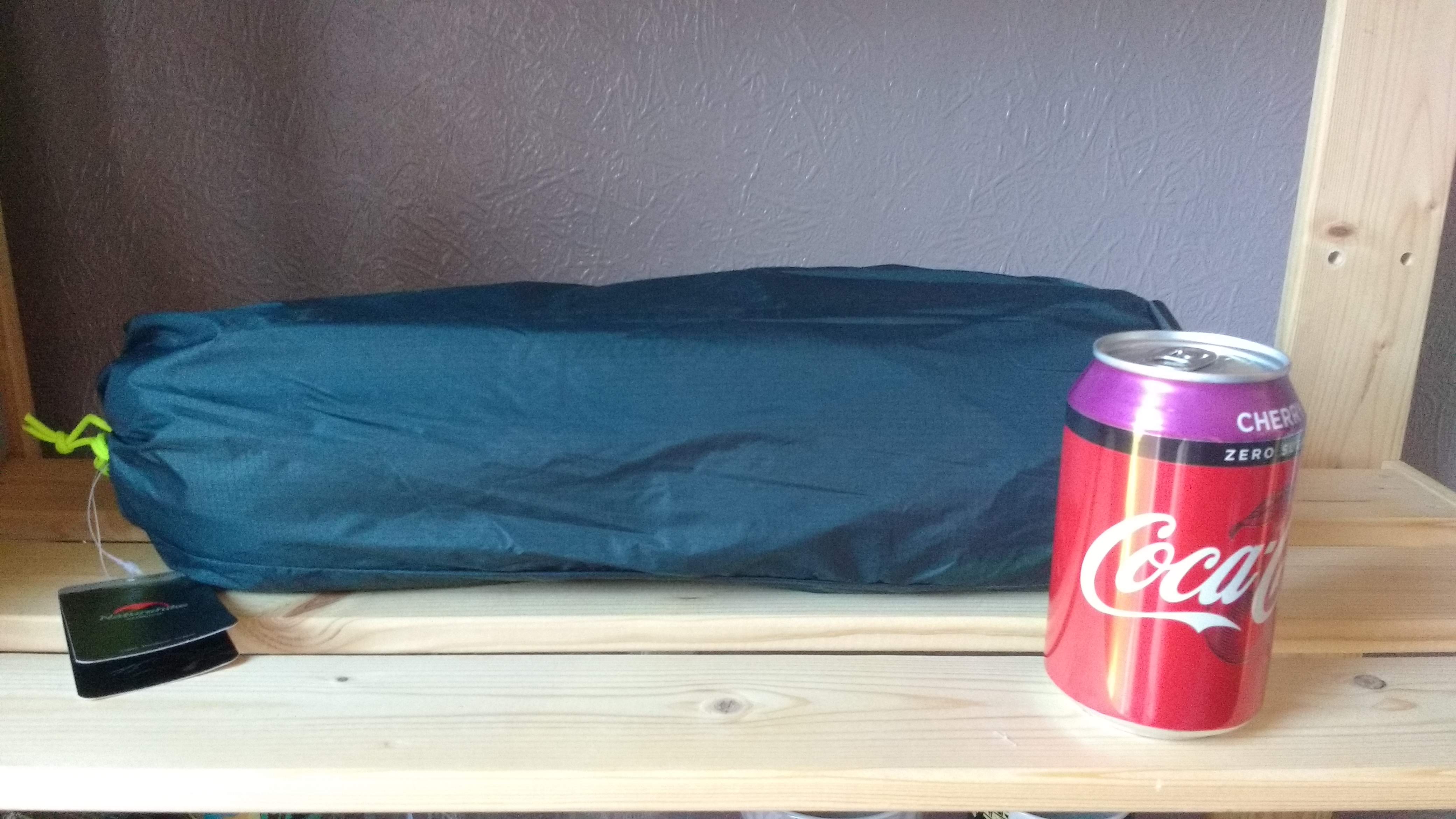 The Taga Naturehike tent has a very small size!
Size and weight
The sleeping area inside Tica 1 has a length of 210 cm (~ 83 ″) and a width of 90 cm (~ 35 ″). There are vestiboli on both sides of the sleeping area, but only part of the curtain has an input. The other vestibule is accessed through a small zipper inside the curtain.
The vestiboli offer 55 cm (~ 21 «) of additional widths at the largest point, but as you can see from the design, they decrease inwards at each end of the tent. As regards the height of the residence, there are 105 cm (~ 41») of space before the head meets the nylon covered silicone.
I have 6 feet in height and I discovered that there is enough space to stay in the middle of the tent. When I stretched inside, I also had a lot of space for the legs and the reserve head.
The curtain has a declared weight of 1063 g (~ 2lbs 6oz) for 1 man. The version for 2 people has a slightly greater weight, of ~ 1200 g (~ 2lbs 10oz). I have not seen the version of 2 people, but it looks like a small weight penalty to pay a fair amount of additional life. However…
During our weighing, 1-man reached 1197 g, that is, practically the weight of the version for 2 people. We talked about how you should always add several hundred grams to the declared weight of any great equipment, to give you some maneuver. So, in total, we were not too disappointed by the weight.
Material
Taga Naturehike is made of nylon covered silicone, with a 3000 mm hydrostatic head. The pillars are composed in aluminum alloy and the version I received has devised a separate protective sheet (we will talk about it below).
The first installation of Naturehike Taga
The episode of the tent seemed quite simple, yet, in some way, I conspired to make it difficult!
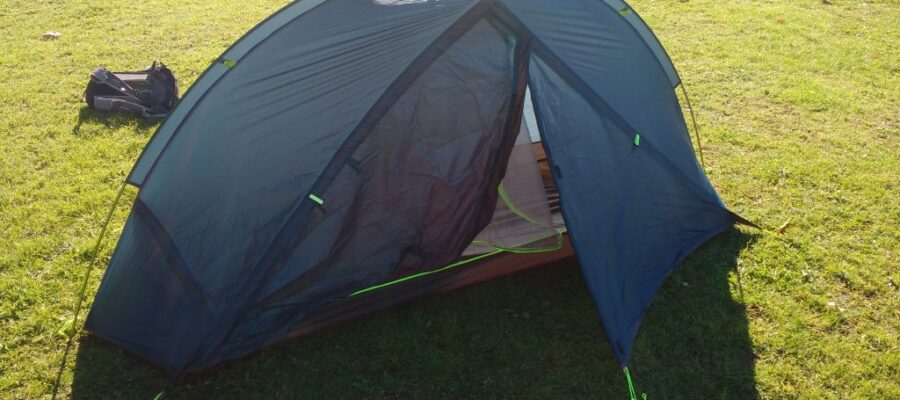
As you can see from the photos, the first attempt was, let’s say … a little difficult. I didn’t have much time to make important changes or adjustments, so the floor is not even flat in the images here. But I am confident that it is not a problem with the tent and that the problem was that I was a derby when I installed this.
The only frustration I met is that, it doesn’t matter how much he tried, I could not understand how the protective sheet should adapt to the image. He never seemed to adapt correctly. So we decided to give up the protective sheet.
Space and storage space
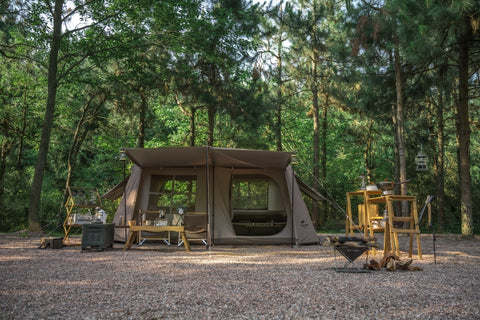
This curtain is supplied with two vestiboli, one of which must be accessible through a zipper inside the curtain. I considered this an important positive point, because it seemed to offer much more space for the storage of the equipment than you would expect from a tent in this class and in this weight. I can’t see anyone having problems with the storage space in this!
Snap verdictSo what is the verdict after my first taga tag of Lamature hike? Well, the profession seems comparable to anything you find on a much more expensive tent. Although the installation was more difficult than I expected, all curtains have their strange installation which must be resolved during the first uses.
That’s all for the moment, good people. I hope you like this first look at Naturehike Taga. Anyone there who use this tent right now? Let us know in the comments!
Conclusion
In conclusion, the first impressions of the Naturehike Taga tent are promising and suggest that it performs comparably to much more expensive tents on the market. While initial setup proved slightly more challenging than expected, this is not uncommon with many tents, especially those that offer advanced features or compact designs. With a little practice and familiarity, the installation process becomes straightforward, allowing users to enjoy the full benefits of the tent.
The tent’s quality and construction indicate a thoughtful design aimed at both durability and comfort. Even though it may present minor initial hurdles during setup, the overall experience highlights the tent’s potential for reliable performance in various outdoor conditions. It is evident that Naturehike has focused on delivering a product that balances affordability with functionality, providing an accessible option for campers who want high-quality gear without paying premium prices.
This first look at the Naturehike Taga also emphasizes the importance of real-world testing and user feedback. While personal experience is crucial, hearing from other campers who have used the tent extensively can offer additional insights into long-term durability, ease of use, and practical features. Sharing experiences and tips within the camping community helps everyone make more informed decisions and enhances the overall outdoor experience.
Ultimately, the Naturehike Taga tent appears to be a solid choice for both novice and experienced campers seeking quality, value, and reliable performance. With a bit of practice in setup and adjustment, this tent can provide a comfortable, dependable shelter for many adventures. User feedback and continued testing will only strengthen its reputation as a trustworthy, versatile outdoor companion
latest posts published
Explore Lyon’s traboules with mobile applications

Caravaning in Lyon: where home?

First look: The Light Tent Taga

Review of the trekking pole – camping curtains
Brown friends and clean air: a camping guide

How to choose the camping hat?
The best bathroom points near Lyon camping
How to sleep well when you are camping?

Kitchen equipment for camping