Hi, friends 🙂 Sorin from socializing with us here. Well, I found you with a new article.
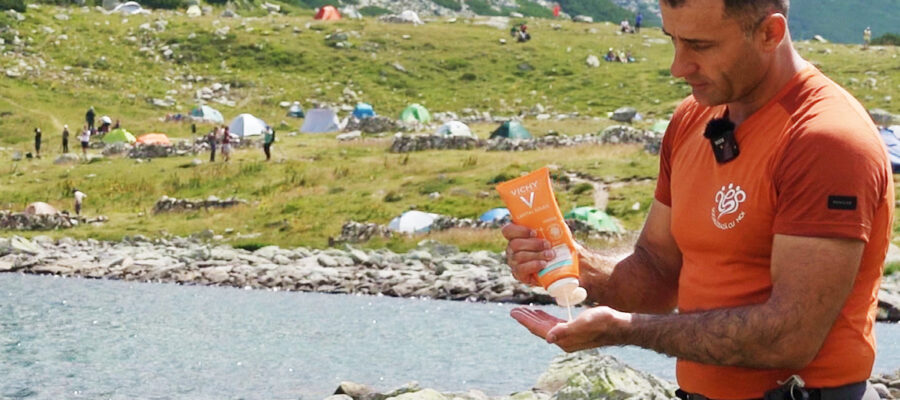
I write it as a complement of the video that I made on the sunscreen during the excursions on the mountain and, if you have not seen the video, I invite you to do it now. So read the article to complete your knowledge. Contains more information to the video.
Introduction
The hot season brought many people to the mountain. I like that. I like to see how more and more people decide to leave cities, pensions and laziness in the tent, near the car and take the path of the routes.
Obviously, this infusion of new people on the mountain also comes with its problems, in the sense that a good part of them does not know how to «use» the mountain correctly.
I see many:
- without equipment or
- I see them with the equipment but I don’t know how to use it
- or see them with the equipment but use it incorrectly
Many of them do not even know the risks or problems they are exposed to.
If I am good at thinking it is a bit normal to be like this. People are at the beginning and we who are bigger in the «branch» we have to understand and help them.
For this reason I decided to create the series of educational videos «Anyone can go to the mountain. Yes. You too!»
The series of this clip is part, aims to help those who want to learn to go to the mountains correctly, in a way that will entertain them safely.
Why do we have to protect ourselves from the sun?

Or what we can happen if we don’t give ourselves with the sun and we don’t protect ourselves with other methods.
In the short term we can do some scalds. They are painful and quite unpleasant, but they are temporary.
In the long term, however, we can make skin cancer.
Obviously, as the term «cancer» suggests, it is much worse and, for me, this is the number 1 for which we should protect ourselves.
Solar radiation
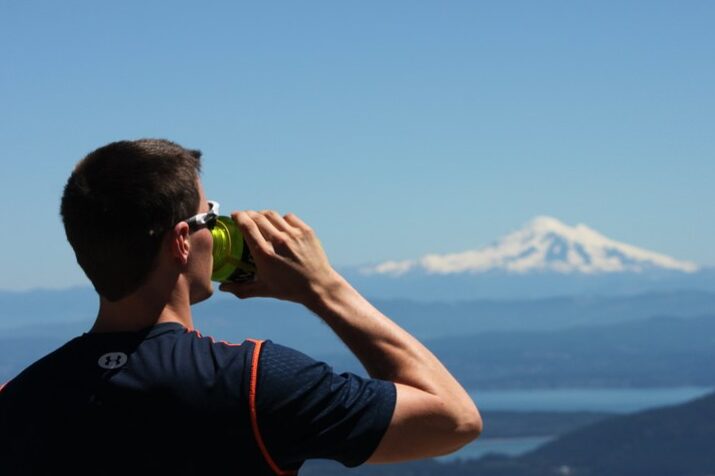
The sun emits 3 types of radiation:
- UVA radiation – i.e. those that can cause skin cancer
- UVB radiation – i.e. those that can cause burns
- UVC radiation – that is, those we don’t have to do because they filter their level of ozone
Sun cream
Or sun protection is mandatory on mountain excursions.
It has an indicator specified on it SPF – sun protection factor.
This indicator shows us how well it protects the cream from UVB ultraviolet radiation.
YES. SPF only speaks of UVB radiation, those that cause burns and not on grapes, that is, those that can cause skin cancer.
How do we protect ourselves from grape radiation?
We use sun protection that is mentioned on it the term wide spectrum or that specified on UVA + UVB protection.
The creams that this specification also protect us from the radiation of grapes and UVB radiation, usually to the same extent.
Does a bigger SPF mean a much better protection?
Yes and no.
Why do I say it?
Well, after passing a certain value, the protection offered is minimal.
For example:
SPF 15 blocks 93% of UVB radiation
SPF 30 blocks 97% of UVB radiation
SPF 50 blocks 98% of UVB radiation
SPF 100 blocks 99% of UVB radiation
So my recommendation is to use a protective factor of at least 30 and pay attention to the application, because if it does not apply it correctly, which SPF will not correctly do its job.
How long does the cream protect us?
If applied correctly, about an hour and a half two hours.
And less than if we sweat abundantly or use a questionable quality cream.
How do I do?
As you can see in the video, I give myself a lot of cream. It is the thing that all specialists recommend.
I do it at the beginning of the day and then reapply during the days when I take breaks for meals.
The recommendation of specialists is to give us every two hours.
Do we protect ourselves with clothes or cream?
The clothes protect us from radiation much better than the sun cream. That is, if their fabric is often or if specified in their technical record, the UPF indicator (ultraviolet factor), equivalent of SBF.
It is still known here that dark clothes protect us from radiation better than color light.
YES. This even if the open ones attract less heat than closed.
So my recommendation for you is to cover a larger leather surface with clothes and the rest, the one that is not covered with clothes, to protect it with sun protection.
For most people any type of dense fabric coat will filter most of the harmful sun radiation.
On the contrary, those of you who have a very sensitive skin (that is, they burn from the sun much faster than their friends) I recommend that they look for clothes that have a minimum of 30 protective factors.
The most common mistake
The most common error that I noticed in people who use sun protection on the mountain is that they are too small.
This is because in reality they want to spend time in nature, don’t be with sun protection.
It is understandable, but, as I wrote above, the risks involved in the improper use of the protective cream are high.
Giving you a sun cream correctly means assigning a minimum of 5-7 minutes every two hours to do it.
Whether it’s only us, you can easily neglect the cream every two hours. Lenea is … great sometimes and I was in this situation.
Not. Solar cream starts protecting us at 20-30 minutes after application.
What do we do if we use the anti -iscect cream?
First we give ourselves. We let it go well on the skin. To dry. And therefore apply the anti -insect substance.
What do we do if we enter with our eyes?
We will rinse very well with water.
Grapes for lips
Protects us from burns caused by the sun.
It protects us from their dehydration.
It protects us from their crack which could be caused by the wind.
I advise you to take one with a minimum protective factor of 30 SBF and give it every two hours, just like you do with sun protection.
I advise you to apply it and after eating or after drinking water. It disappears very easily from the lips.
If it is cloudy, should we use the protective cream?
The fact that the sun is covered by us can deceive us to believe that we are safe with the sun.
We are not. This is because the clouds do not filter ultraviolet radiation. They also act when it is cloudy when it is clear.
So yes. We use protective cream and when it is cloudy.
If it is cold outside, do we have to use sun protection?
YES. The action of ultraviolet radiation is not related to temperature.
This is because the sun warms us with infrared radiation. Ultraviolet radiation is something else, they are not linked to heat.
So yes. It may be cold outside, but our skin is still burned by UV rays.
Which sunscreen I recommend?
As I wrote above, I recommend a cream that:
- To have a minimum of 30 protective factors
- Be resistant to water because it is important for her to resist as much as to sweat walking on paths or heat simply
- Be wide spectrum (i.e. write to it that protects us from grapes and UVBs)
- Sun Protection Cream AlphaNova Bio 50+
2. Sun Protection Cream 200 ml Active IP 50
3. Sunti spray for sun protection 150 ml FPS50+
Disclaimer
YES. If you click on one of the links above, the connections that bring you to the Decathlon website and buy something online from them, whatever, not necessarily sunscreen, I receive some money from the purchase price.
I invite you to do it. In this way he helps me to support the project socializes with us.
Conclusions
I hope the lines above have taught you to protect you better from the sun on the mountain, friends.
If you have a question, I invite you to write it in the comments.
If you want to share your experience with the community, do below in the comments.
To see you well on the paths,
Sorin riantan
Mountain guide and ski instructor
latest posts published
Explore Lyon’s traboules with mobile applications

Caravaning in Lyon: where home?

First look: The Light Tent Taga

Review of the trekking pole – camping curtains
Brown friends and clean air: a camping guide

How to choose the camping hat?
The best bathroom points near Lyon camping
How to sleep well when you are camping?

Kitchen equipment for camping