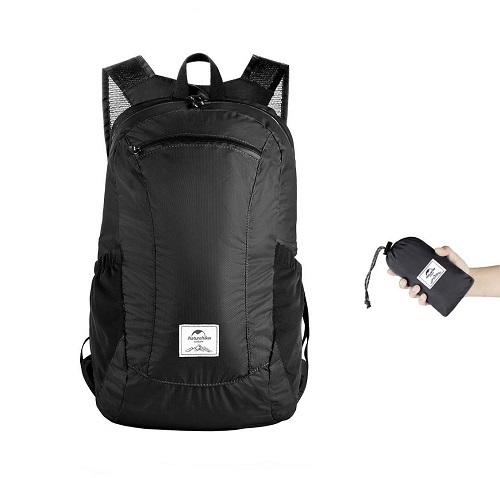
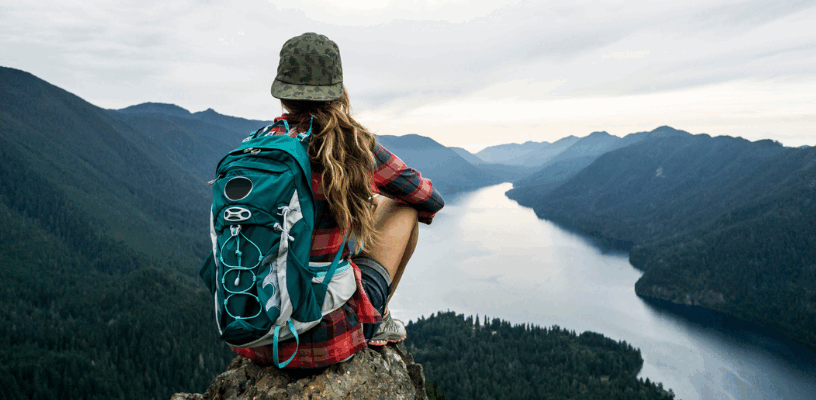
Whether you go to the mountains for a day or weekend trip or for a longer expedition that includes climbing on a high tip, the backpack is an essential equipment. Find out how to choose a backpack for excursions, trekking or climbing, so you can put your equipment and travel easily.
The time spent on the mountain paths is one of the basic determinants for the choice of a backpack and its ability. In general, the shorter the excursion, the smaller the ability to search. Avoid buying a larger backpack thinking that it will be useful on other trips. Such an approach usually translates into the packaging of unnecessary things and, therefore, also a short trip for leisure, can be transformed into an unpleasant effort, especially if you are not used to bringing loads back.
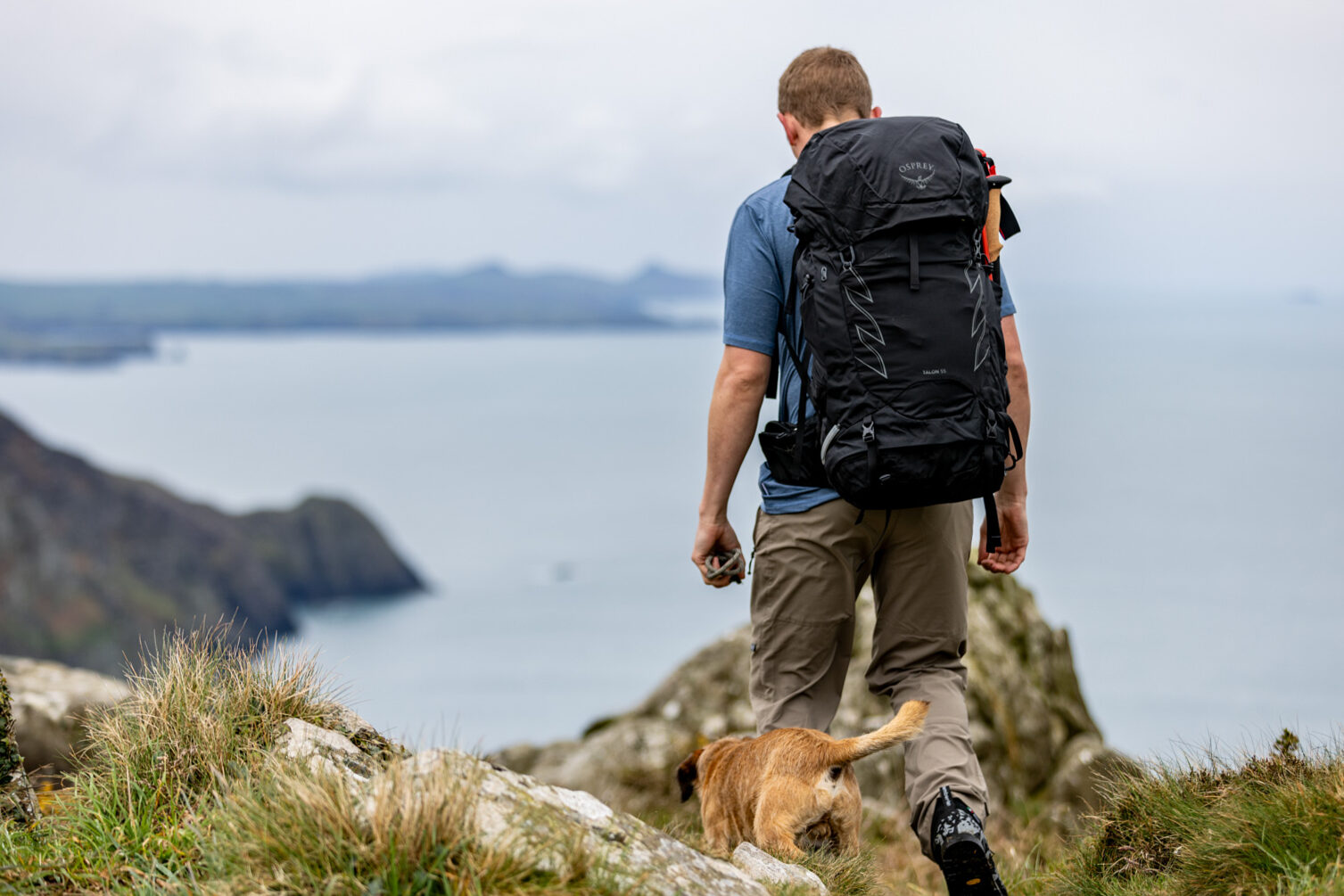
When choosing a backpack in the mountains, you should also consider the type of route on which you will take the excursions (low mountains with a few climbs, steep and long climbs with rocky routes, etc.), the period of the year, which you intend to bring with you and your general physical conditions. For a hiking day, a backpack with a capacity of up to 35 liters is the best, for an excursion of several days with Bivac you can choose a model with a capacity between 55 and 80 liters and as a mountaineer you should look for an option of 40-55 liters with many belts for equipment such as home, trekking. If you are looking for a while
backpack
Solid and functional for excursions, excursions or mountaineering, take a look at the offer of world leaders in the production of equipment and clothing for outdoor activities, that is to say: The North Face, Colombia, Black Diamond, Thule, Deuter or Orthovox.
Transport system
The most important part of any mountain backpack, which allows you to evenly distribute the weight of the luggage on the shoulders and back, thus avoiding the overload of the spine and the skeletal system in general. Unlike a normal city backpack, the weight of our luggage cannot be supported only on our shoulders. To this end, special panels are added on the back (light stiffening or aluminum frame – found in longer hiking models) and thoracic hips and straps. The transport system, which is adapted to your height and profiled according to the shape of your body, guarantees comfort as you walk on the mountain.
Most of the time, since the ability of a trekking backpack or excursions increases, the transport system becomes more complex. Many models have a back panel with spacing mesh or specially arranged bearings, which are responsible for adequate air circulation in the rear. Thanks to them, the air can reach the rear and the backpack does not stick to the body with all its surface. In addition, hip belts (especially in larger models) are also equipped with cushions to make the back on the back more comfortable, to distribute it correctly and prevent irritation.
Material
The material used for a mountain backpack must be resistant, of high quality and resistant to external influences (for example, humidity, UV radiation, etc.) or mechanical (for example, abrasion, elongation, etc.). Currently, the backpacks are made with different types of polyester (for example, with an additional layer of PU), polyamide, nylon, ripstop, endura or cordura fiber (a combination of polyamide and polyurethane). Although most of these materials dry quickly and do not absorb humidity, it is worth choosing a case of rain to change the weather conditions, which will protect clothes, equipment and supplies of rain and humidity. It is usually available as an accessory for more trekking or climbing backpacks. For camping equipment, for example, you can also buy an additional waterproof bag to protect your luggage (for example, Tatonka Stausach).
Room, fireplace and flap
The compartment is the main part of a backpack, where it is possible to keep the mountain equipment. It can be unique (usually in low -capacity models) or divided into two compartments separated by a partition (for example, you can be used to keep dirty/humid clothes). Access to the items packaged in the lower compartment is facilitated by a lower zipper, so that you can comfortably reach the article or the clothing you need, without having to spread the entire content. Pelle bags often have a separate compartment. The larger trekking models are equipped with a fireplace, which allows you to expand the backpack and obtain additional space, as well as a protective flap at the top of the backpack (fixed or removable) which can be regulated to the capacity of the backpack and on the basis of which it is possible to keep, for example a rope or a curtain or a curtain, a rope or a curtain or a jacket.
Side pockets and pants
The pockets and side belts help to better organize luggage and therefore increase the functionality of the backpack. The first is an ideal compartment for small objects that you need easy and quick access, like a bottle of water. You can attack the trekking sticks, a tripod for the camera, a carrim or even a tent. The specialized models can be used to connect a helmet, an ax, a rope, etc.
Hydration system
The famous Camelbak is the best solution for summer trips. The water tank with a drinking tube that passes along the straps and a narrow closure is available in different capacities (for example 1.5 or 3 liters) and its main purpose is to allow hydration at any time without hands. Some backpacks have a special pocket for the tank instead of a system.
TECHNOLOGY
Most of the most important manufacturers of excursions, excursions and mountaineering have developed special technologies to make their equipment more useful in the mountains. North Face offers the Dyno Cinch System ™ system for compression of the backpack with one hand and the absorption technology of the Flashrry-XD ™ humidity.
Black Diamond backpacks use the Openair ™ Breathair panels on life belts. Deuter patented the ergonomic and comfortable system of the Aircomfort Deuter system, a transport system that offers three -way ventilation, reducing the sweating of 25% and helping to reduce body temperature.
Depending on the fact that you plan a few hours of travel on a less demanding route (for example, one of the sections of the Aquila nursery, an ascent to the castle of Chojnik or łysa Góra), a more intense ascension to śnieżka or Babia Góra or a few days of crossing the tatra mountains, you must choose a more intense role to host clothes and housing and help.
Backpack for a day trip to the mountains
In this case, the best choice is a hiking backpack, with a capacity of 20-35 liters and a weight of about 1 kg, in which you can easily put a rain jacket, a bottle of water, a hat/buffet, a front torch and supplies. Choose a lower summer capacity (for example, the North produces Chimera 24L) and a larger one for a winter journey that requires additional clothes to change (for example, shirt, socks, gloves, etc.). It should have a slightly lined transport system, with good ventilation, sides and thoracic straps and adjustable straps to adapt perfectly. In addition, elastic lateral pockets (for example, a bottle or water may be useful), a front pocket (for small objects, such as keys, documents, etc.) or straps to hang the trekking sticks.
Do you prepare a family trip with your little excursion? For younger excursions, a light backpack, with a capacity of 5-10 liters, will be useful, with a chest belt, lateral pocket for a bottle/bottle of water and reflective elements (for better visibility in low light conditions). Children’s backpacks often also have an internal label for personal information and some models have a hydration system, such as the hydration of the Thule 6L bike.
Excursions backpack
For a journey of several days when you intend to stay in a pension or pension and you don’t have to take a sleeping bag, a carriage or a curtain, it is worth buying a backpack with a capacity of 40-55 liters. Rain coverage or a reinforced and comfortable transport system will certainly be useful. It is worth taking care of compatibility with a hydration system or a dedicated pocket for a water tank (especially in the summer months, especially if you have no place to buy a bottle of water on the road).
If for a few days in the mountains you have to go with the curtain and bring with you additional equipment (curtain, sleeping bag, stove, etc.), consider a backpack with a capacity of 50-80 liters. Remember to measure your strength based on what you can transport and know that every additional surface means extra kilos, which can determine the success of your expedition. A trekking backpack usually has several belts and rings to attach the equipment, compression belts (to reduce the thickness of the backpack), side pockets and a flap. It is worth noting the fireplace, the lower compartment and the lateral hinges, which allow the rapid removal of the objects positioned in the lower layers of the backpack.
The climbing backpack has a rather minimalist design, which can somehow remember a sailor bag. Its thinnest and most flat design aims to guarantee, among other things, the ease of handling between the rocks. For safety reasons, it is usually equipped with a minimum number of pockets, belts, loops, belts or other protrusions, and this translates into greater stability.
The climbing backpacks rarely extend over the head because of the need to turn frequently. In many models, you will notice a slight truncation of the shape in the lower part, which has the role of working better with the harness.
The climbing on the mountain is more difficult and more physically demanding than walking on the path, so the weight is very important in the case of mountaineering backpacks. This is reduced using light but durable materials (for example, to bear) to avoid abrasion, for example.
The backpacks designed for mountaineering often have a helmet pocket, a belt for hips and accessories for a rope or ax, while the side straps are designed so that skiing can be easily attached. Climbing backpacks are available in a variety of dimensions and the final choice of liter must be again corresponding to the length of the shipment.
latest posts published
Explore Lyon’s traboules with mobile applications

Caravaning in Lyon: where home?

First look: The Light Tent Taga

Review of the trekking pole – camping curtains
Brown friends and clean air: a camping guide

How to choose the camping hat?
The best bathroom points near Lyon camping
How to sleep well when you are camping?

Kitchen equipment for camping