The end of the day is approaching, but there is no doubt of ending up in their tent. Matthias has published the guitar, Pierre-Louis is already preparing Popotte and Charlotte is immersed in reading the last Yasmina Khadra.
But now, you have forgotten the stove and, apart from the use of a corkscrew and the game time has expired, you don’t know much in the evening. Finally, you immediately met by telling Nathalie that you were the ace of the bivouac …
Don’t panic, we are there, follow the guide and you could even get points thanks to the small techniques that we will reveal
Before starting, you should know that the house you are going to create will depend on your needs, your wishes and obviously weather and geological conditions.
Basically, cook for one night without any particular bond and cook for some nights, whatever the weather conditions require different families.
We have therefore listed some types of lights, which will allow you to be able to camp in all serenity!
Campfire Basics: How to Build a Safe Fire While Camping
As the sun begins to set and everyone settles into the campsite, the campfire naturally becomes the heart of the evening. It’s where meals are prepared, stories are shared, books are read, and friends gather after a day of hiking or exploring. But if you’ve forgotten your camping stove or simply want to enjoy the traditional camping experience, knowing how to build a safe and efficient fire becomes an invaluable outdoor skill.
Choosing the Right Fire for Your Needs
Before collecting wood or striking a match, consider the purpose of your fire. A small cooking fire requires different preparation than a fire intended to provide warmth throughout a cold evening. Weather conditions, local regulations, available fuel, and the type of terrain should all influence how you build your campfire.
Whenever possible, use an existing fire ring or designated fire pit. These areas are specifically designed to reduce environmental impact and improve safety. If campfires are permitted but no fire ring is available, choose a clear location away from dry grass, low-hanging branches, tents, and other flammable materials. Keep a bucket of water, sand, or a shovel nearby so the fire can be extinguished quickly if necessary.
Building a successful fire starts with gathering the right materials. Begin with dry tinder such as small twigs, dry leaves, pine needles, or natural fire starters. Add small sticks as kindling before gradually introducing larger pieces of firewood. Avoid using green or damp wood, as it produces excessive smoke and burns inefficiently.
There are several popular campfire layouts suitable for different situations. The teepee fire is easy to ignite and ideal for cooking or quickly generating heat. The log cabin fire burns steadily and provides a stable bed of coals for preparing meals, while the lean-to fire works well in windy conditions because it offers additional protection for the initial flame.
If you’re cooking over an open fire, allow the flames to settle into glowing embers before placing cookware above the heat. Cooking over hot coals provides more consistent temperatures than large flames and reduces the chance of burning food. A portable grill grate can make outdoor cooking even easier and safer.
Fire safety should always remain the highest priority. Never leave a campfire unattended, even for a few minutes, and supervise children closely whenever they are nearby. Before leaving the campsite or going to bed, extinguish the fire completely by pouring water over the embers, stirring the ashes carefully, and repeating the process until everything feels cool to the touch. A fire that appears extinguished can still contain hidden hot spots capable of reigniting.
Finally, respect the environment by using only fallen dead wood where permitted and following local fire regulations, especially during periods of high wildfire risk. A well-managed campfire not only provides warmth and a place to cook but also creates some of the most memorable moments of any camping adventure. With proper preparation and responsible practices, you can safely enjoy one of camping’s oldest and most cherished traditions.
Classic bonfire
The one around which we laugh, sing, play, in short, we share the good times! It is a bit of the soul of the bivouac, which turns on and heats you, so it is a matter of not losing.
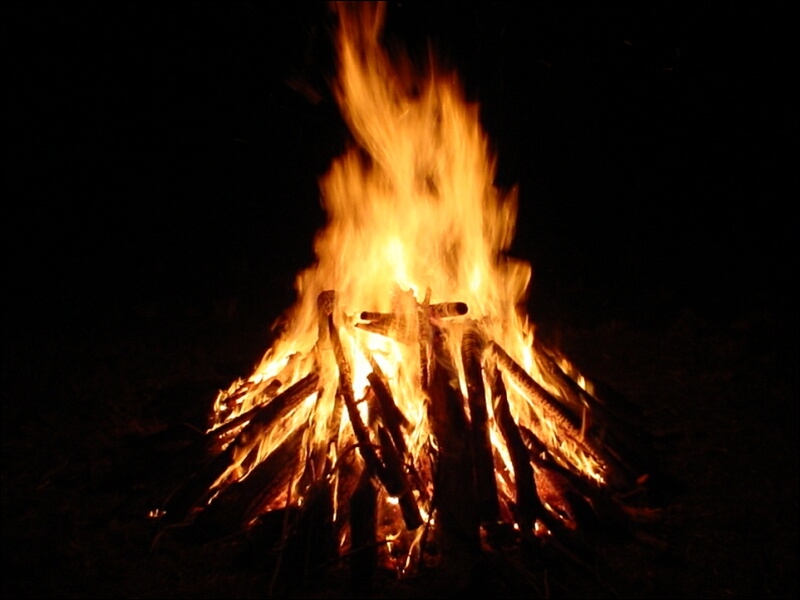
First of all, he begins by collecting some pieces of paper in which you will incorporate the games. So, using small sprigs of dry wood form a pyramid above the paper. Continue delimiting a square around the fire using large pieces of wood. Thanks to four long pieces of wood, it forms a pyramid over the small pyramid, fill the space with medium ends. Finally, when they took, you can incorporate large trunks. Be careful in the same way, this fire consumes a lot. Make sure not to squander the wood collected a few hours earlier!
Bonfire to cook
Now let’s move on to serious things, the fire for the cuisine, which will make you save you to feed with lichen and rough white beans, and incidentally not be cursed by all the troops!
For this type of fire there are several solutions, which depend on the time you will spend in the field (a few hours bivouac in a field of a few days), the orientation and strength of the wind and the tools you have. Having said that, don’t worry, let’s stay in the realization field for any neophyte.
Here are some techniques that will make you pass for an expert trapper:
The ground is rocky and are you a little lazy? Take 3 large stones (10 cm in mini height) and make a U, destroy the twigs inside and place the pan. If necessary, use the registers to bear the pan, like a grid. If it rains, setting a tent with a tarpaulin or plastic bag should be enough.
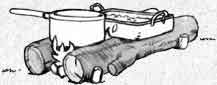
Don’t have a shovel? Cut (or find) two large not too dry rounds, frame in parallel (from 10 to 15 cm between the trunks) and install the fire inside. With this technique, you can easily boil 2 pots and the coffee maker at the same time. So, isn’t life beautiful?
«Okay, they are good guys, but there is a wind to decorate oxen!» How do I do? »» »
Don’t panic Jean-Mich ‘, we have several solutions:
Fire in Lean -to, which does not require tools. It will allow you to wrap a strength and start any fire!
The «Polynesian» fire thus called, the best relationship of simplicity/efficiency in our opinion.
With an altarpiece, dig a hole from 30 to 40 cm deep. Two possibilities are available. Hang a saucepan (with a handle) above the hearth using a large branch. Place the pan on the fireplace, making sure to let the air pass. If you seem sure of yourself, we will not ask you questions 😉!
Finally, for a field of several days, here’s THE technique that will increase you to the degree of «Jedi Master» Close to your friends!
Here, keep in mind that there are many other techniques to perform a bonfire, but with these you can get out of most situations. As for ignition, the least gifted can use 80% organic resin sticks and unusable fire prevention stones, significantly simplifying the task. As for Nathalie, it depends on you!
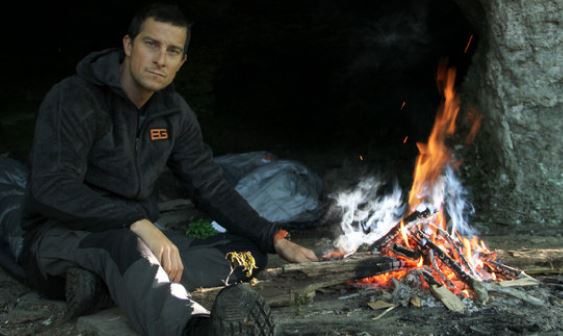
*Bear Grylls is an mountaineer and an adventurer known for his television program «Man against wild» (man against nature).
latest posts published

Explore Lyon’s traboules with mobile applications

Caravaning in Lyon: where home?

First look: The Light Tent Taga

Review of the trekking pole – camping curtains
Brown friends and clean air: a camping guide

How to choose the camping hat?
The best bathroom points near Lyon camping
How to sleep well when you are camping?

Kitchen equipment for camping